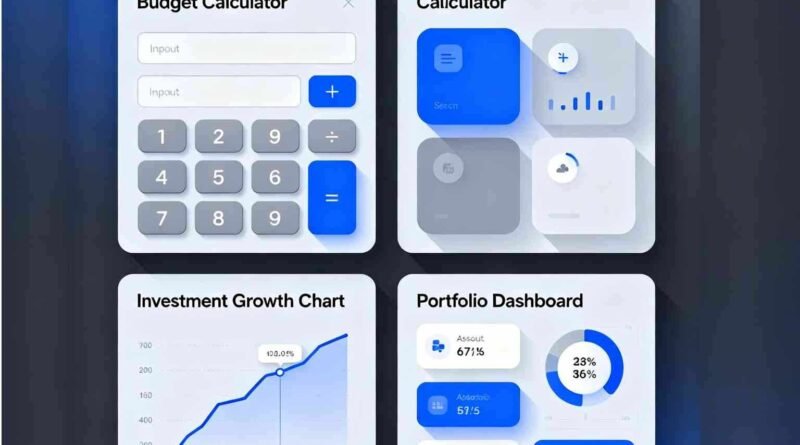
The Rise of Modular Financial Planning Tools
No more choosing between static templates and bloated software. Today, people want flexibility. They are asking for products fit to change with them, to their needs and profit streams and life stages. This demand caused the rise of modular financial planning software.
There’s financial planning, and it’s a modularized system. Users can choose which modular components to cobble together, rather than relying on a monolithic fixed framework, from budgeting and investment tracking to retirement planning and debt management. This flexible format will offer personalized and scalable financial strategies.
1. So What Exactly are Modular Financial Planning Tools?
Modular systems are those with independent modules. Each portion addresses one particular financial issue. Users although can enable, change or group modules according to their requirement.
This structure improves adaptability.
2. What is Faulty with Traditional Tools for Planning
The latter are generally all included in a single tool with traditional financial software. This may be too much for a user who only needs a few of these functions. It also doesn’t easily scale to fit changing life circumstances.
Rigid systems reduce usability.
3. Customization and Personalization
Modular features enable users to fabricate their own tailor-made financial plans. For students, that might be budgeting and reducing debt; for people with jobs, it may mean monitoring investments.
Customization increases relevance.
4. Role of Technology and AI
Using modularity tools, meta-knowledge of users can give suggestions for modules that would fit in a particular context. Once a customer begins to save robustly, the platform can suggest investment-planning features.
Technology supports intelligent growth.
5. Benefits of Modular Financial Tools
Modular systems offer multiple advantages:
- Flexible financial structure
- Reduced complexity
- Scalable planning options
- Better goal alignment
- Improved user engagement
These benefits encourage long-term consistency.
6. Integration With Other Financial Platforms
Today’s modular tools plug in to banking apps, investment accounts and tax platforms. More Consolidate all your financial accounts in one place, but keep the flexibility.
Interconnected systems improve visibility.
7. Adapting to Life Changes
Financial priorities shift over time. A new spouse, house or job could require a revision to your plans. (Townsend et al., 1978)They can upgrade their tools with out redesigning complete systems.
Adaptability ensures continuity.
8. Supporting Different Income Structures
Danger moneyIt is the “financially dangerous” (those whose income stream, or streams are unreliable) who have most to gain from a flexible menu of modules:
- Specifically allocated budget lines to irregular income
- Dynamic savings calculators
- Emergency fund tracking components
- Automated debt payoff planners
- Investment growth simulators
Tailored solutions improve stability.
9. Challenges in Modular Design
Modular tools can have some advantages but also limitations:
- Over-customization complexity
- Data synchronization issues
- Privacy concerns
- Learning curve for users
- Dependence on accurate input
Balanced design is essential.
10. The Future of Flexible Financial Planning
As financial requirements vary, modular systems will expand. Future platforms might allow users to activate features with the help of voice assistant, or through predictive ‘nudges’. At the very least, we would have more interactive and proactive financial planning.
Modularity of financial planning tools mirrors broader tendency towards flexibility and adapting to preferences. Instead of trying to fit people into the savings product box, technology can enable the management of how money is managed to be reflexive and based on its users.
Key Takeaways
- Bento’s modular personal finance tools allow a person to power up the budgeting, saving & investing modules once they are required
- They are more flexible, can be scaled up and are better at engaging
- As circumstances move with the times, modular options are going to be at the forefront of looking after your moolah
FAQs:
Q1. What is a modular financial planning software?
It’s a modular system designed to be that way, tailored as much as possible to specific financial fears.
Q2. How does it work compared to other planning software?
Rather than having a preset list, it allows users to add and configure various modules.
Q3. Can a new set of modular tools address the issue of moving financial targets?
Yes you can repurpose modules as life changes.
Q4. Are modular financial tools right for beginners?
Y, even more the package is extensible – one could just go with bare modules!
Q5. Why are there is such a hype right now around modular tools?
Because they offer flexibility and the opportunity for customization in spending.